Press releases (archive)
2015

Cetacean strandings increase dramatically at times of rapid climate change
Researchers of the Department of Human Evolution at the Max Planck Institute for Evolutionary Anthropology in Leipzig, Germany, in collaboration with…

Homo naledi - our new relative
Researchers discover a new species of fossil human in a cave in South Africa

Food-leftovers in the dental calculus
Markers of diet and behaviour in chimpanzee dental calculus
Researchers from the Max Planck Institute for Evolutionary Anthropology in Leipzig,…

The oldest case of decapitation in the Americas
A 9,000 year-old case of human decapitation has been found in the rock shelter of Lapa do Santo in Brazil
Few Amerindian habits impressed the…

Female bonobos: Pointing it out
In order to communicate their intentions wild bonobos use referential gestural communication
Pointing and pantomime are important components of human…

Michael Tomasello receives Distinguished Scientific Contribution Award of the American Psychological Society (APA)
Michael Tomasello’s pioneering research on the origins of socialcognition has led to revolutionary insights in both developmentalpsychology and…

Orang-utan females prefer cheek-padded males
Dominant, cheek-padded orang-utan males are significantly more successful at fathering offspring – except in times of rank instability
Unlike most…

Chimpanzees coping with forest loss
A genetic survey finds an unexpectedly large population of chimpanzees in forest fragments
By collecting faecal samples and analysing them genetically…

MPI-EVA has a new director
Headed by Professor Richard McElreath the Department of Human Behavior, Ecology and Culture is going to start its work at the Max Planck Institute for…

Kiwi bird genome sequenced
The kiwi, national symbol of New Zealand, gives insights into the evolution of nocturnal animals
Its unusual biological characteristics make the…

Complexity before size: Old world monkey had a tiny but complex brain
Victoriapithecus had a small brain relative to its body size with an olfactory bulb about three times as large as that in present-day monkeys
The…
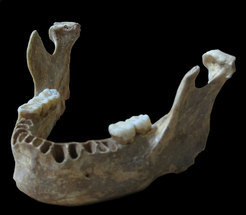
An Early European had a close Neandertal ancestor
Genetic analysis of a 40,000-year-old jawbone from Romania reveals that early modern humans interbred with Neandertals when they first came to Europe
…

Three-year-olds help victims of injustice
Young children are just as likely to respond to the needs of another individual as they are to their own
Toddlers have a reputation for being stubborn,…

Climate change: boating in the desert
Lake Mungo may have inspired Australians to reinvent boat use in the middle of the desert 24,000 years ago
Geologists and archaeologists from the Max…
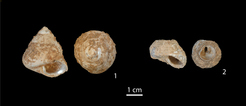
Modern human dispersal into Europe came from the Levant
Modern humans occupied the Near East 45,900 years ago and colonized Europe from there
A multinational team led by researchers from the Max Planck…

Mountain gorilla mamas sidestep having inbred offspring
Genetic study shows that dominant males never sire the offspring of their daughters
Some mountain gorilla females linger into adulthood in the group…

2015 Winner Announced - Chimpanzee Conservation
A multi-level conservation project, which aims to protect the largest remaining population of wild chimpanzees on the Foutah Djallon-Bafing River…

Deciphering the demise of Neandertals
Members of our species Homo sapiens belonging to the Protoaurignacian culture may have been the ultimate cause for the demise of Neandertals,…

Participation sought! New citizen science project
Volunteers will screen video footage filmed by camera traps and identify wild African animal
With Chimp&See, scientists at the Max Planck Institute for…

Oldest evidence for the use of mushrooms as a food source
Analyses of old dental calculus show that humans consumed plant foods and mushrooms as early as the Upper Palaeolithic
The human diet during the…

Eavesdropping on the forest to monitor wildlife
Researchers develop a novel passive acoustic monitoring (PAM) method for the automated detection of chimpanzees and two monkey species
Traditionally,…

Protein is the clue to solving a Darwinian mystery
Bone collagen sequences prove that South American native ungulates are closely related to horses, rhinos and tapirs but not to elephants
The South…
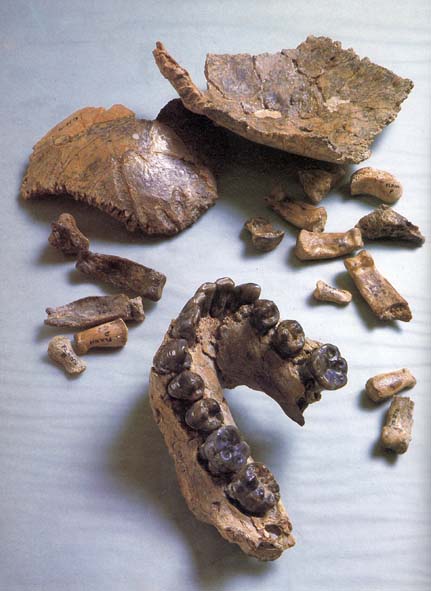
Handy man reborn
Digital makeover of iconic human fossil sheds light on human origins
State-of-the-art computer reconstruction of the original fossil of Homo habilis,…

Detection dog efficacy for collecting faecal samples from the critically endangered Cross River gorilla for genetic censusing
The critically endangered Cross River gorilla inhabits a region of high biodiversity on the border of Nigeria and Cameroon but has been poorly…

Early human ancestors used their hands like modern humans
Pre-Homo human ancestral species, such as Australopithecus africanus, used human-like hand postures much earlier than was previously thought
Some of…

Tonal languages require humidity
Languages with a wide range of tone pitches have primarily developed in regions with high levels of humidity
The weather impacts not only upon our mood…

Wild chimpanzee vocalizations can convey information about food patch size
Chimpanzees modify their food calls with respect to tree size for a high valued fruit species.
The vocalization capabilities of our closest living…

2016 Breakthrough Prize in Life Sciences for Svante Pääbo
Sequencing of ancient DNA and genomes honoured as scientific breakthrough
One of the 2016 Breakthrough Prizes in Life Sciences was bestowed to Max…

Cracking the case
Wild chimpanzees select nut-cracking tools taking account of up to five different factors
Are chimpanzees sensitive to the effect of an object’s…